Pluriversal Expressions:
Mission 2050
Overview
This project is a continuation of past work experimenting with emerging technologies to co-vision with underrepresented communities. As part of Gray Area’s Cultural Incubator, I partnered with 826 Valencia and took part in 6 workshops during its after school program. Students wrote speculative fiction set in 2050 in the Mission District, and from those stories, text was extracted to develop 3D assets using generative AI tools. Assets were placed via a 2D map, and the final output is a playthrough in Roblox of the assets and their corresponding text.
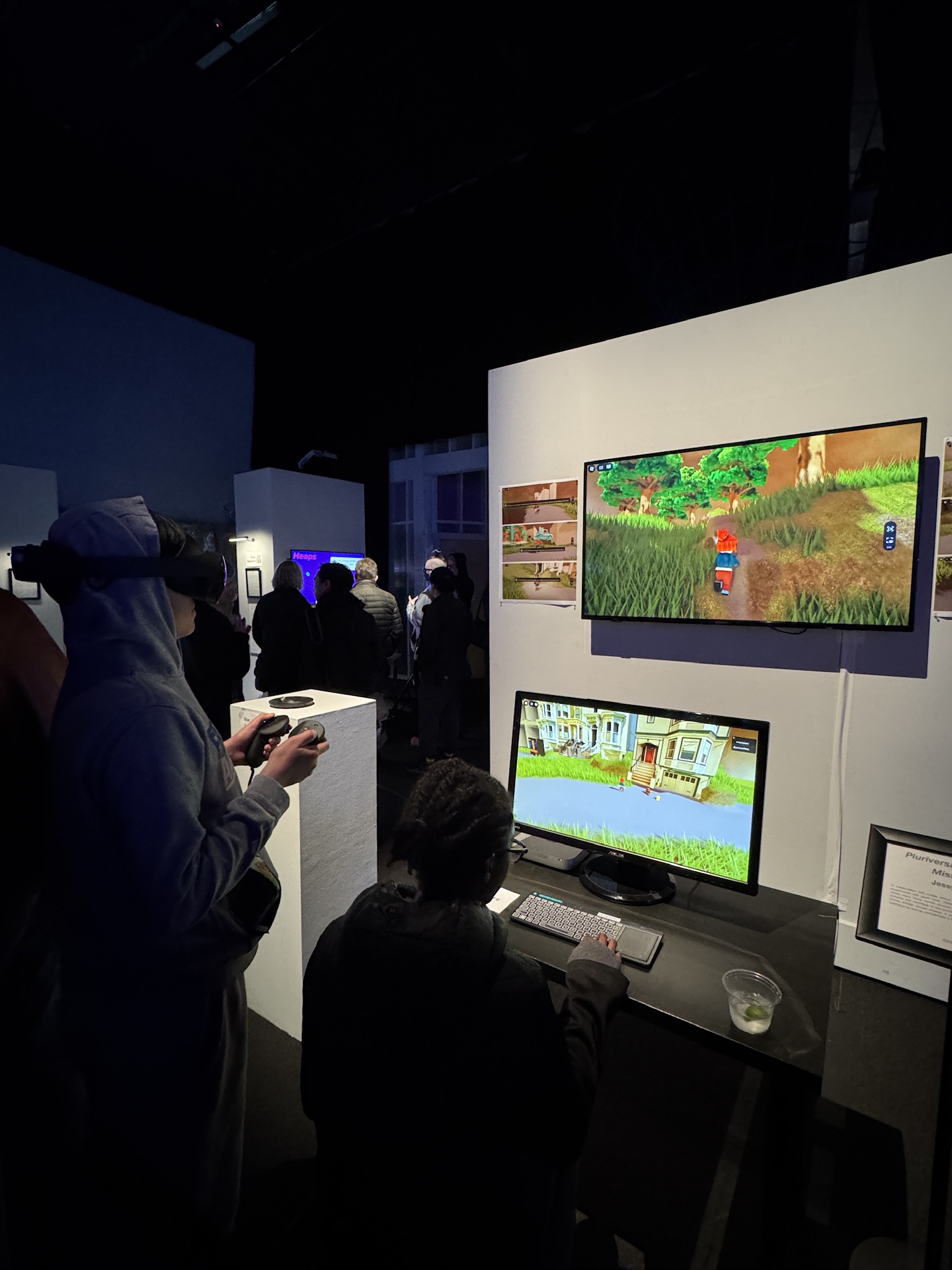 826 Valencia students engaging with VR and PC Roblox at exhibition at Gray Area Theater
Workflow
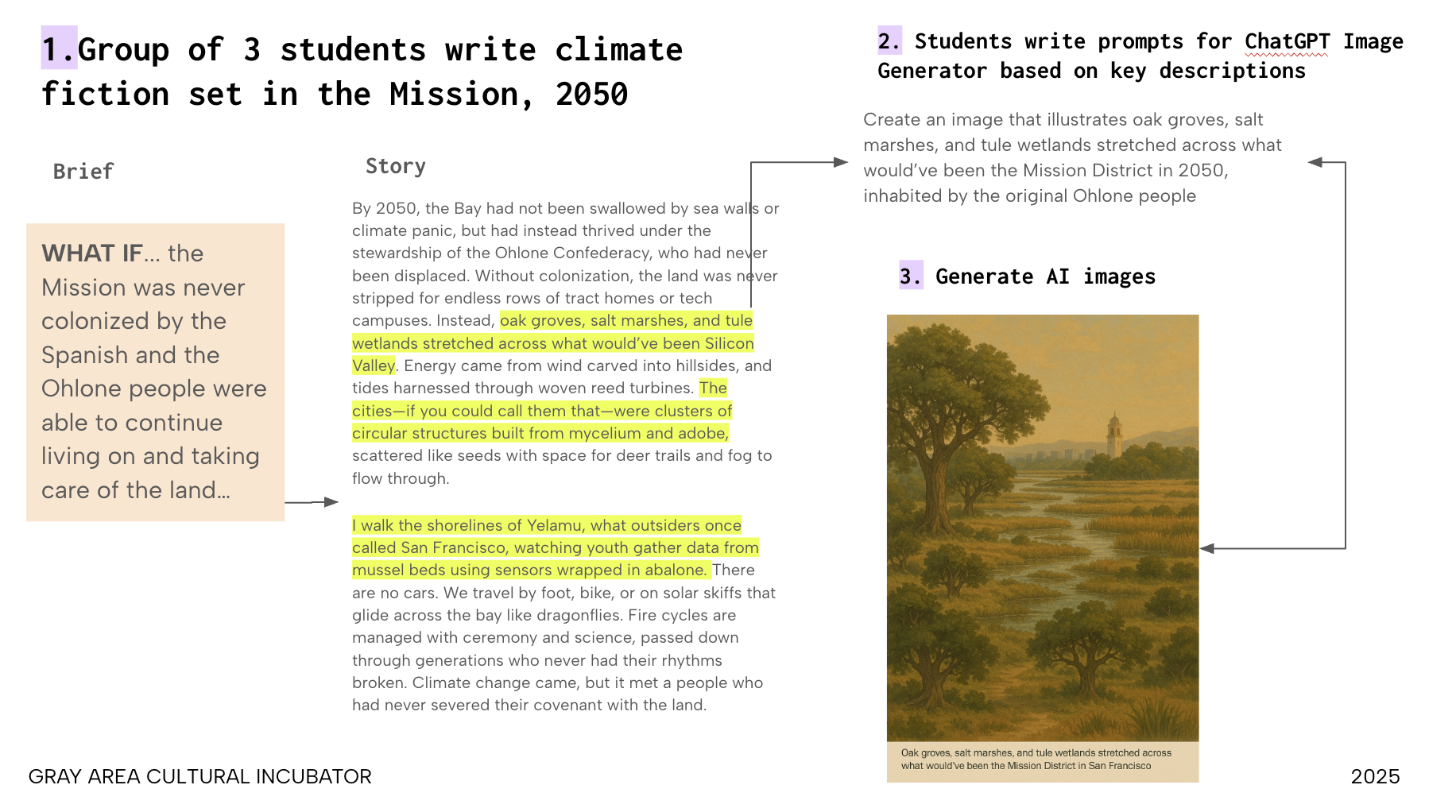
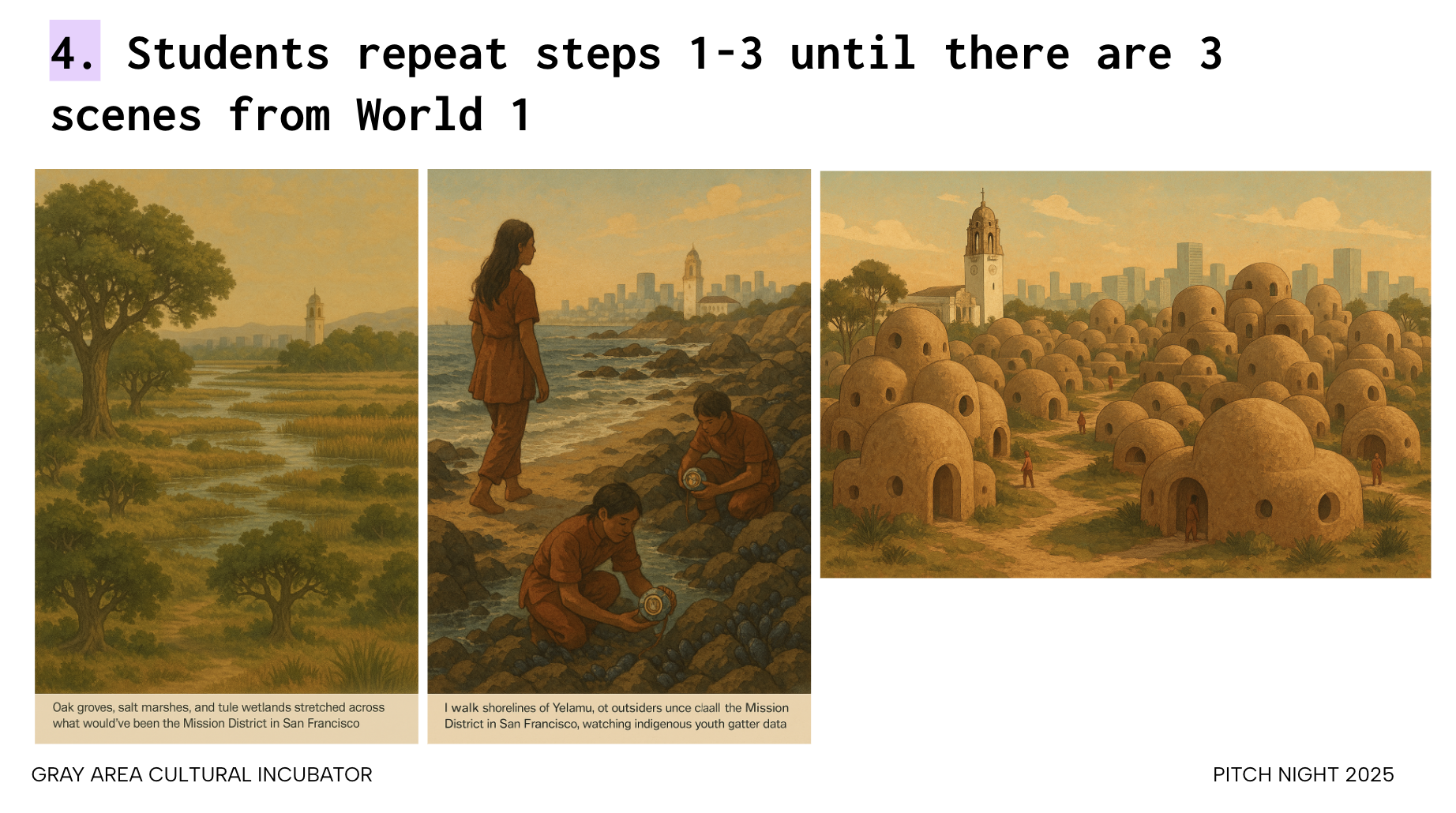
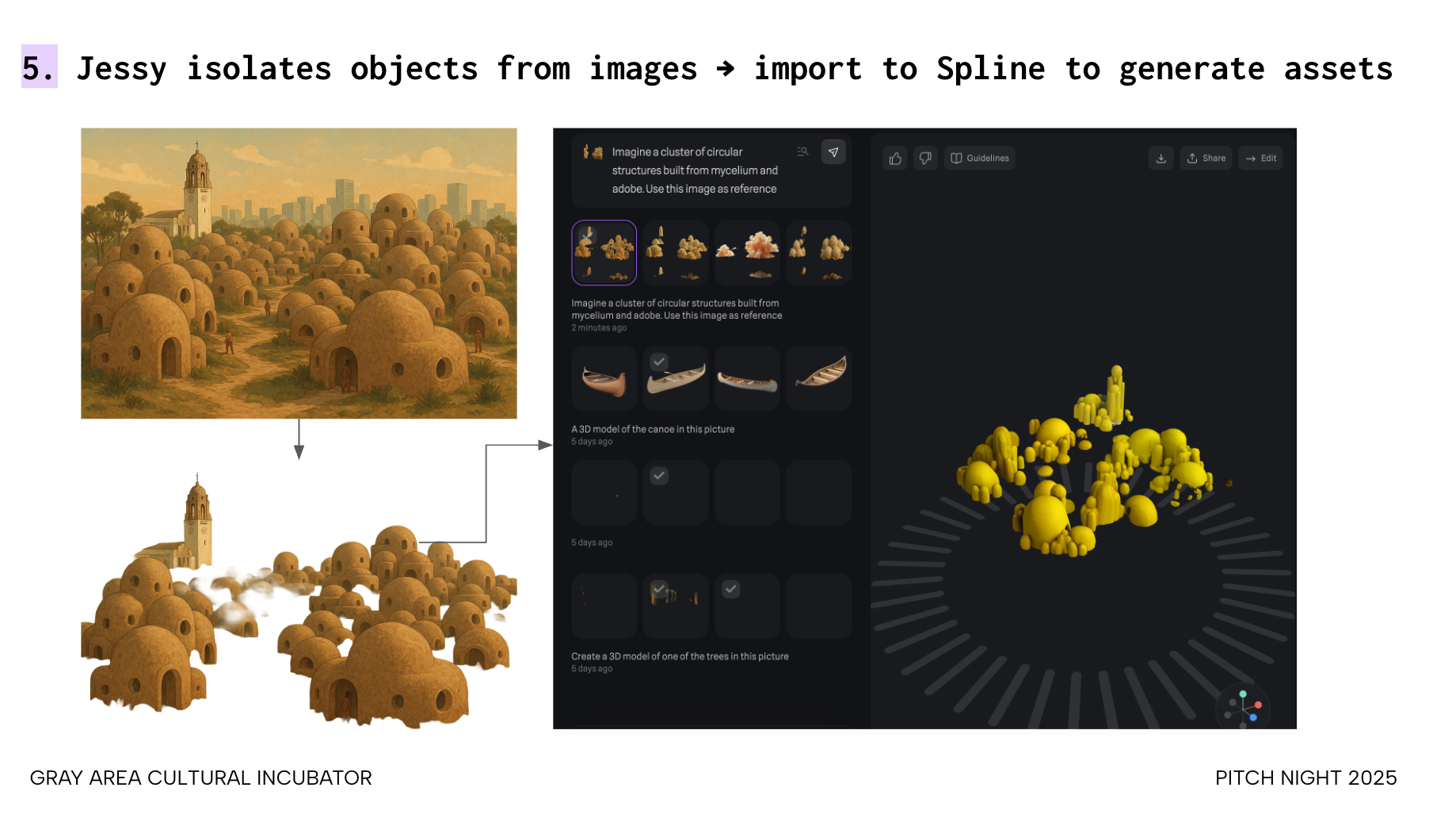
This workflow came about reflecting on genAI tools available like ChatGPT and MeshyAI that could make participating in 3D worldbuilding much more inclusive for all ages. A text-first approach, as opposed to a drawing-first approach, could allow for everyone in the class who could describe something vividly to participate--with an added bonus that they liked to write!Here’s the example I provided to the class:
Engagement
Not far into the incubator timeline, I was approached by a director at 826 Valencia to collaborate on a project that would inspire middle school students to take on leadership skills, but also incorporate technologies like AI and video games. The assignment prompts - to imagine a speculative Mission in 2050 and create a pluriverse where ‘many worlds fit’ would be the theme we’d flesh out over the coming weeks. Of 24 students, we would create 8 groups, and each student would write one scene in the group’s world. 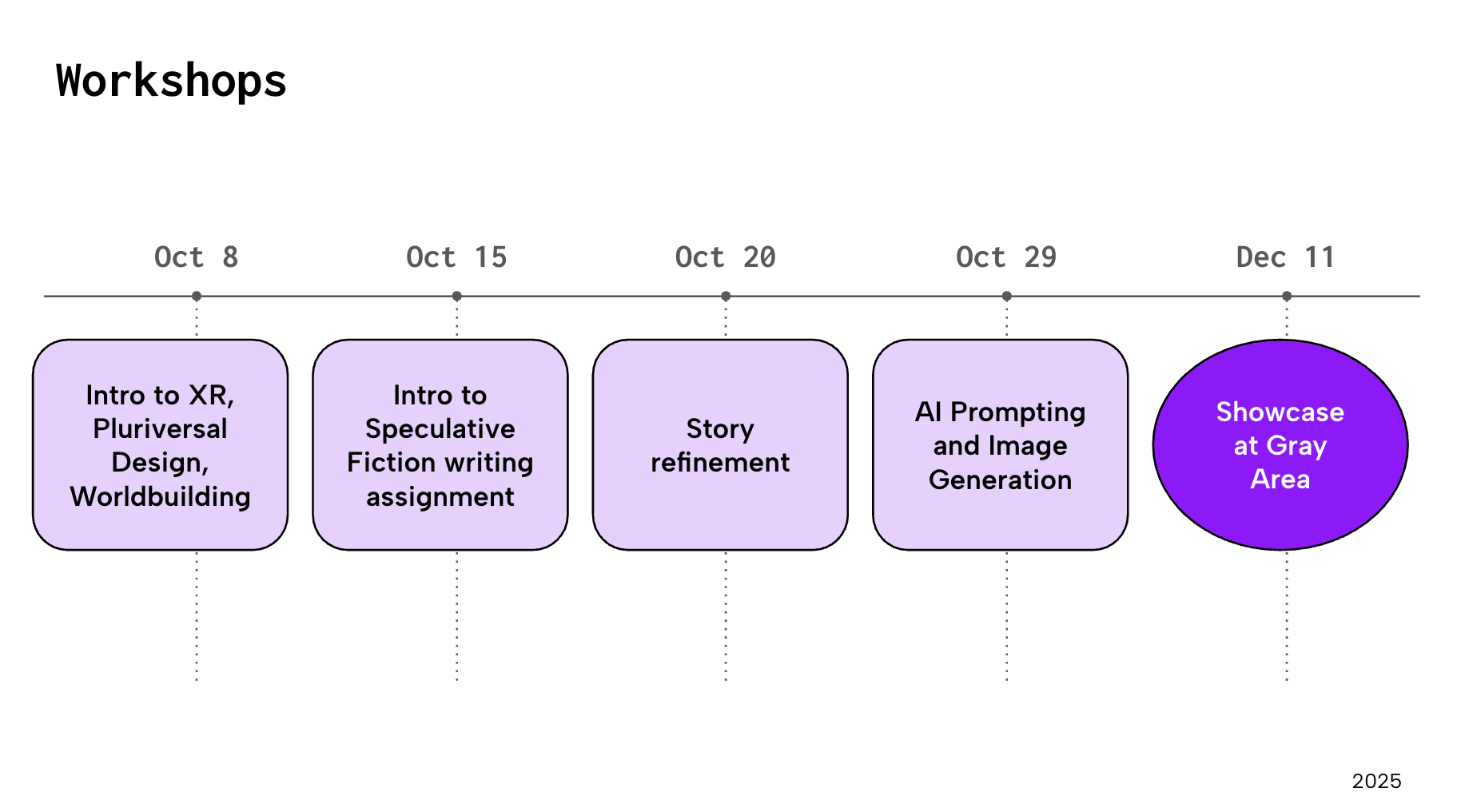
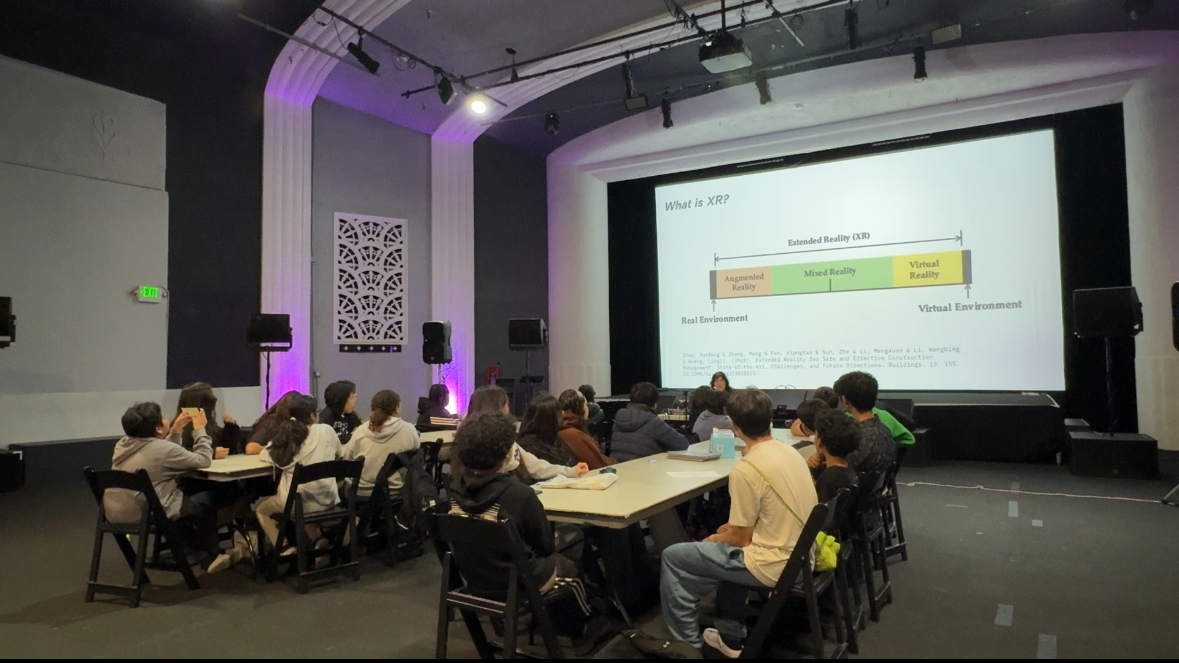 Intro to XR, Pluriversal Design, Worldbuilding workshop #1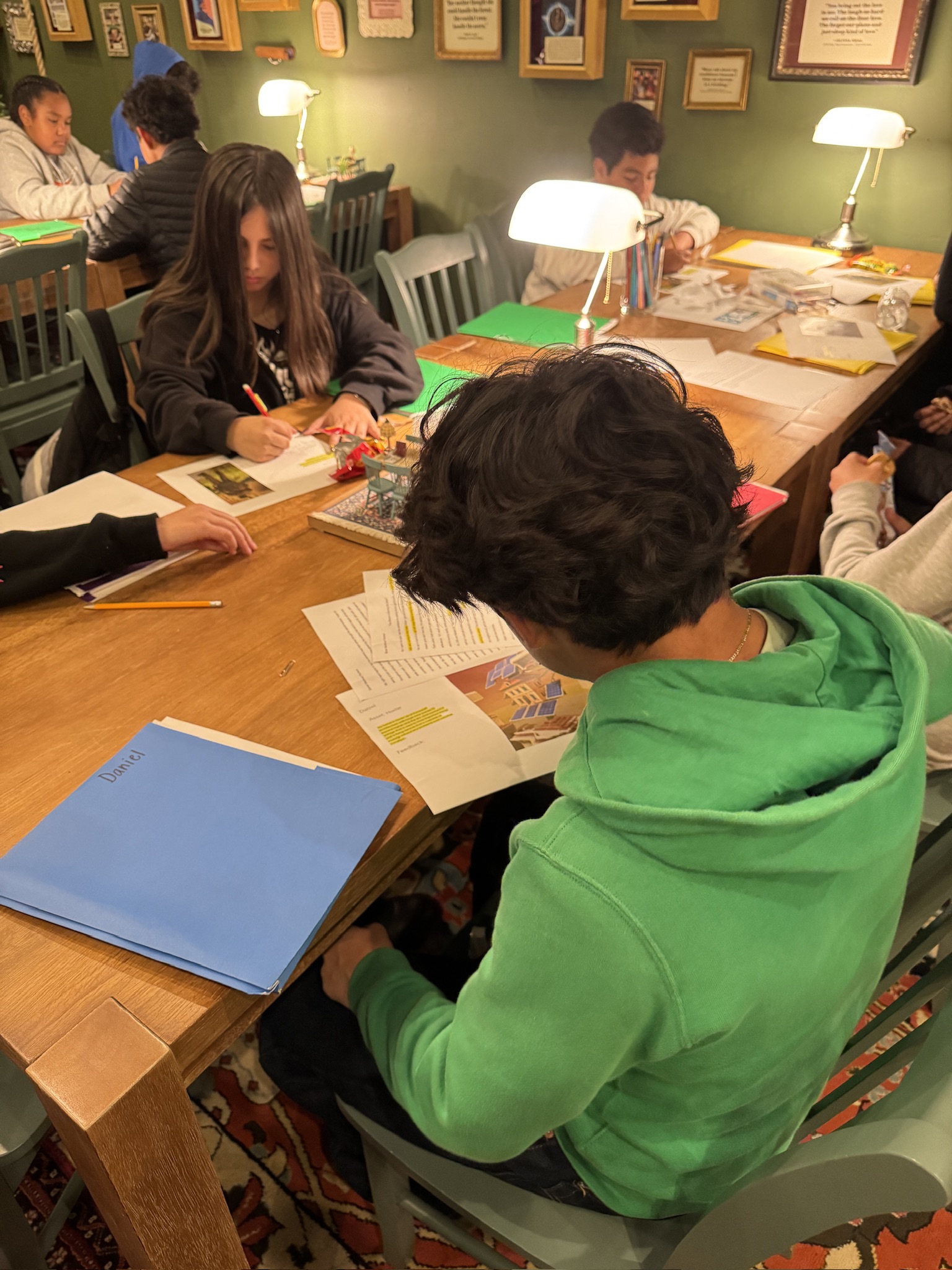
Students providing feedback on assets I created from their stories
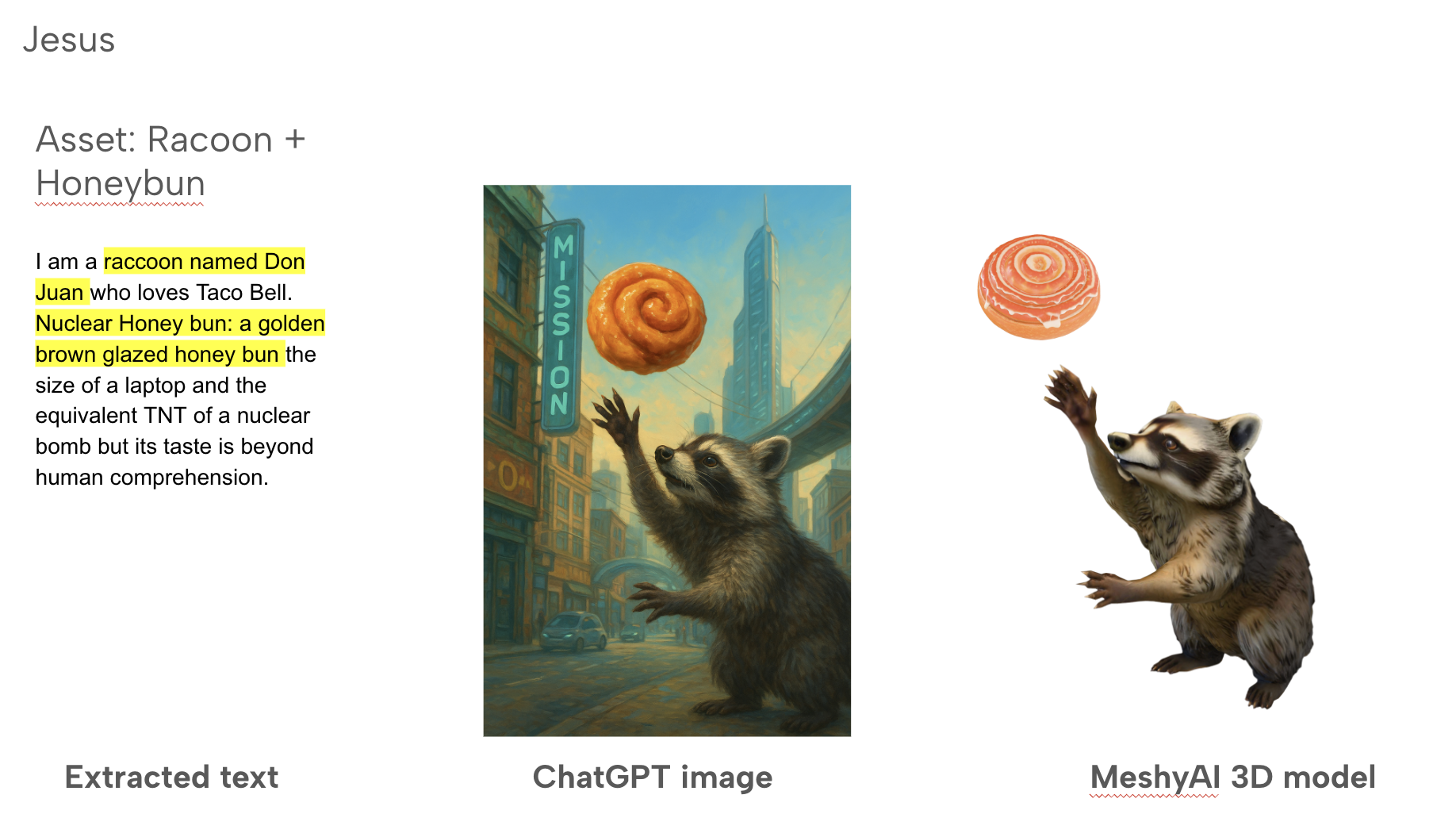 Example of the asset making process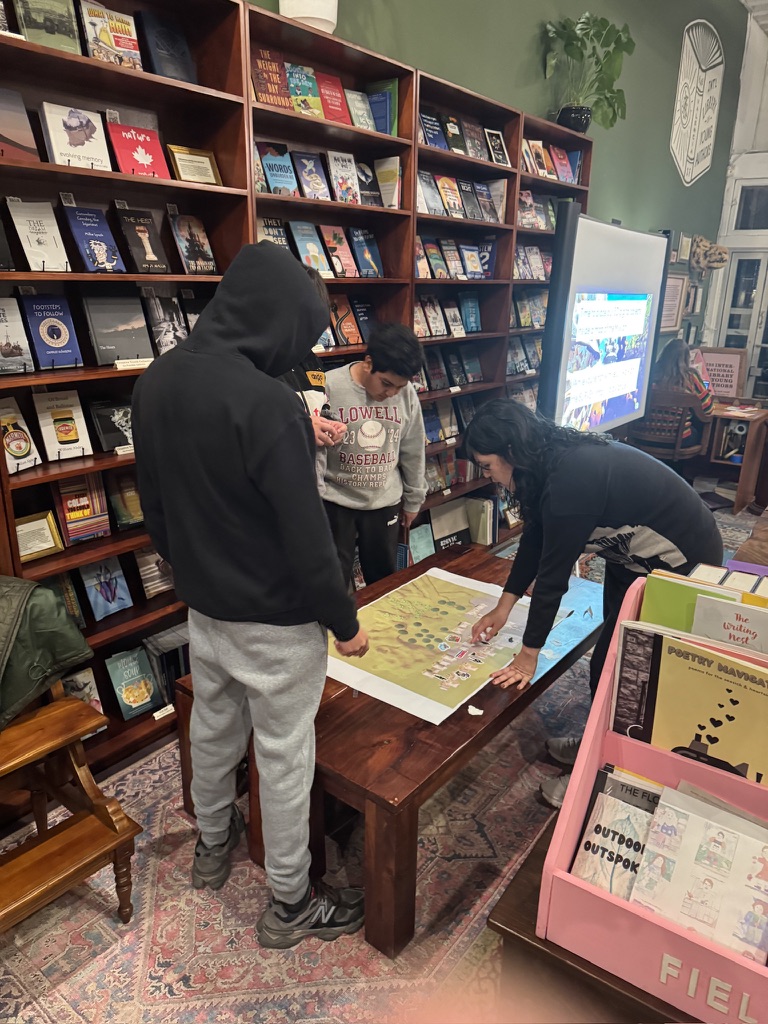
Placing the final assets on a top view map of the Roblox topography I was creating

Final mapping
Challenges
1) Middle school is an age where future thinking is not yet a common muscle. Students jumped to dystopian futures or mere fantasy, and with tight schedules, we decided to let the integrity of the students’ stories fluorish as opposed to try to mold or force any other thinking. In retrospect, there could’ve been strategies I could’ve borrowed from the futures world to get the students thinking a certain way, but with the tight scheduling and amount of students, I decided to go with the flow.
2) Access to and familiarity with Roblox Studio for every student was a technical hurdle. Initially chosen so eventually students could place their own asset and negotiate with others live, technical hurdles did not allow this to be the case. Instead, I created a top view map to do the final placement, which worked out fine, but defeated the purpose of engaging with topics of pluriversal thinking and leadership skills.
Conclusion
I am overall pleased with the outcome and engagement from the students on this project. Feedback from students ranged from liking the topic to students not knowing that their writing could impact something like a video game on Roblox. Some students found the writing to be hard but interesting. Some students came to the final exhibition and enjoyed the final work!If I were to do this all over again, I would work with older students, perhaps in undergraduate level, as the futures topic and simultaneaous technical skills in 3D asset generation. While this time the focus was on validating the workflow, I would like to spend more time on the outcome content more, and generate useful and interesting pluriversal expressions that say more about a particular group’s wishes and fears in one immersive map view.